The short answer: clear small items out of each room, group large furniture in the center, point out wall damage before the estimate, test paint colors in your own light, and set up a safe space for pets and kids. Do those five things and most interior painting projects in Plainfield-area homes start on time and stay on schedule.
After 20 years of interior painting in Plainfield, Naperville, Joliet and nearby communities, we can tell you the jobs that go smoothest are the ones where the homeowner knew what to expect. This guide walks through the same preparation steps we talk through during our free in-home estimates — no jargon, no sales pitch.
Move Furniture and Clear the Walls
Start with the walls and work your way down. Take down pictures, mirrors, shelves, curtains and curtain rods. If you plan to reuse outlet and switch covers, remove them and keep the screws in a labeled bag — otherwise let the crew handle them.
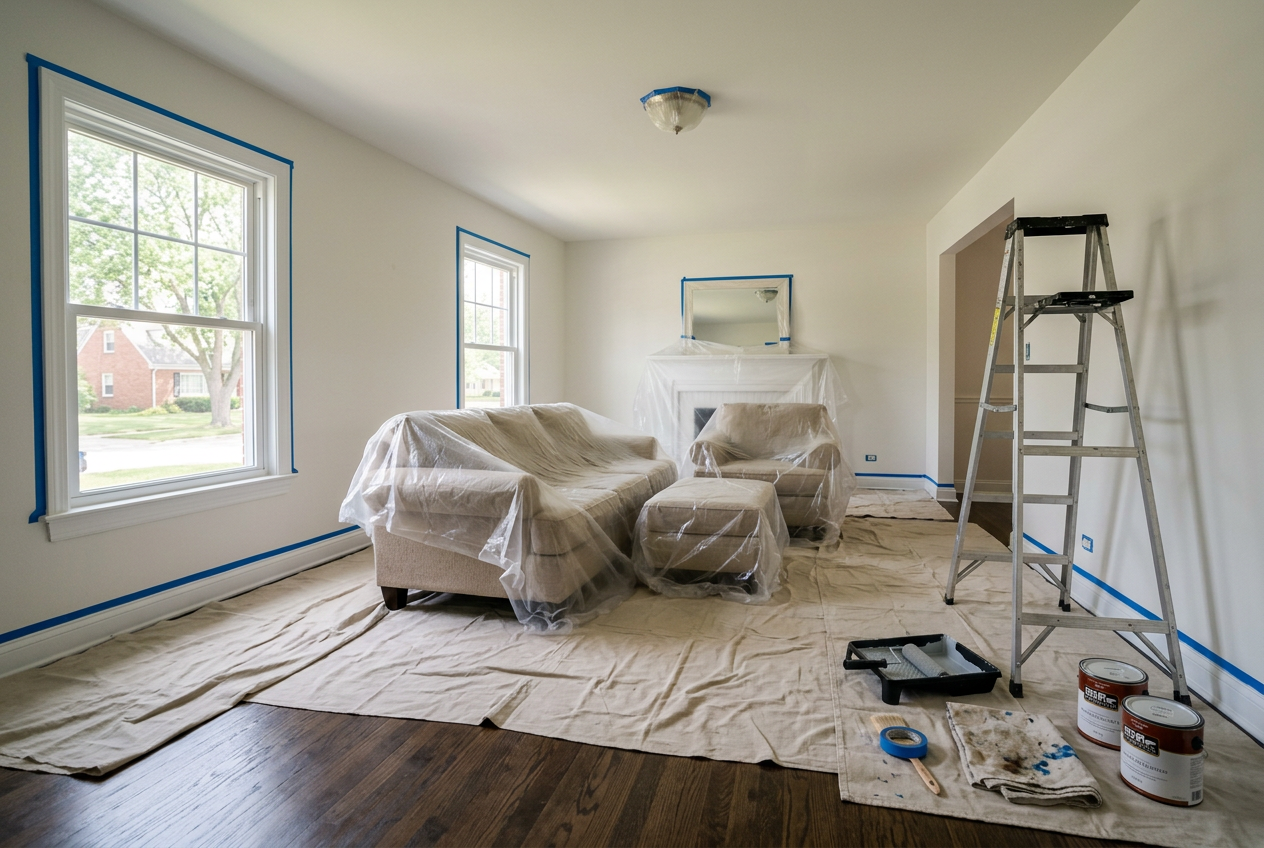
Small furniture, décor, lamps and electronics should leave the room entirely. Large pieces — sofas, sectionals, beds, dining tables — usually move to the center of the room, at least three feet from the walls, where they get covered with plastic. If something is too heavy or too delicate to move safely, say so during the estimate so it is planned for, not discovered on day one.
Protect Floors and Fixtures
Professional crews bring canvas drop cloths and plastic sheeting, and floors in the work path should be covered wall to wall — not just where the ladder sits. Hardwood and tile in Plainfield-area homes hold up well, but only when spills are caught immediately.
You can help by pointing out anything that concerns you: new flooring, a finished stairway the crew will use, or fixtures that cannot be removed. A good contractor masks and protects first and paints second — if you ever see the order reversed, ask questions.
Handle Wall Repairs Before Painting
Paint does not hide wall damage — it highlights it. Nail pops, hairline cracks, dents, and old water stains all show through a fresh coat, especially with higher-sheen paint. Walk each room before your estimate and mark damage with a small piece of painter's tape.
Small nail holes are a simple fill-and-sand. Larger holes, cracking seams, or drywall that has taken on water need proper drywall repair — cut out, patched, sanded and primed — before finish paint. Because we handle both trades, repairs and painting are usually scheduled together rather than as two separate projects.
Choose the Right Sheen for Each Room
Sheen is about more than looks — it decides how your walls handle daily life:
- Flat / matte: ceilings and low-traffic walls. Hides imperfections, but marks easily.
- Eggshell / satin: living rooms, bedrooms and hallways. A soft look with real washability — the most common choice in the homes we paint.
- Semi-gloss: trim, doors, kitchens and bathrooms. Stands up to scrubbing and moisture, but shows every bump underneath.
If your walls have patched areas, a lower sheen will make the repairs far less visible.
Test Colors in Your Own Light
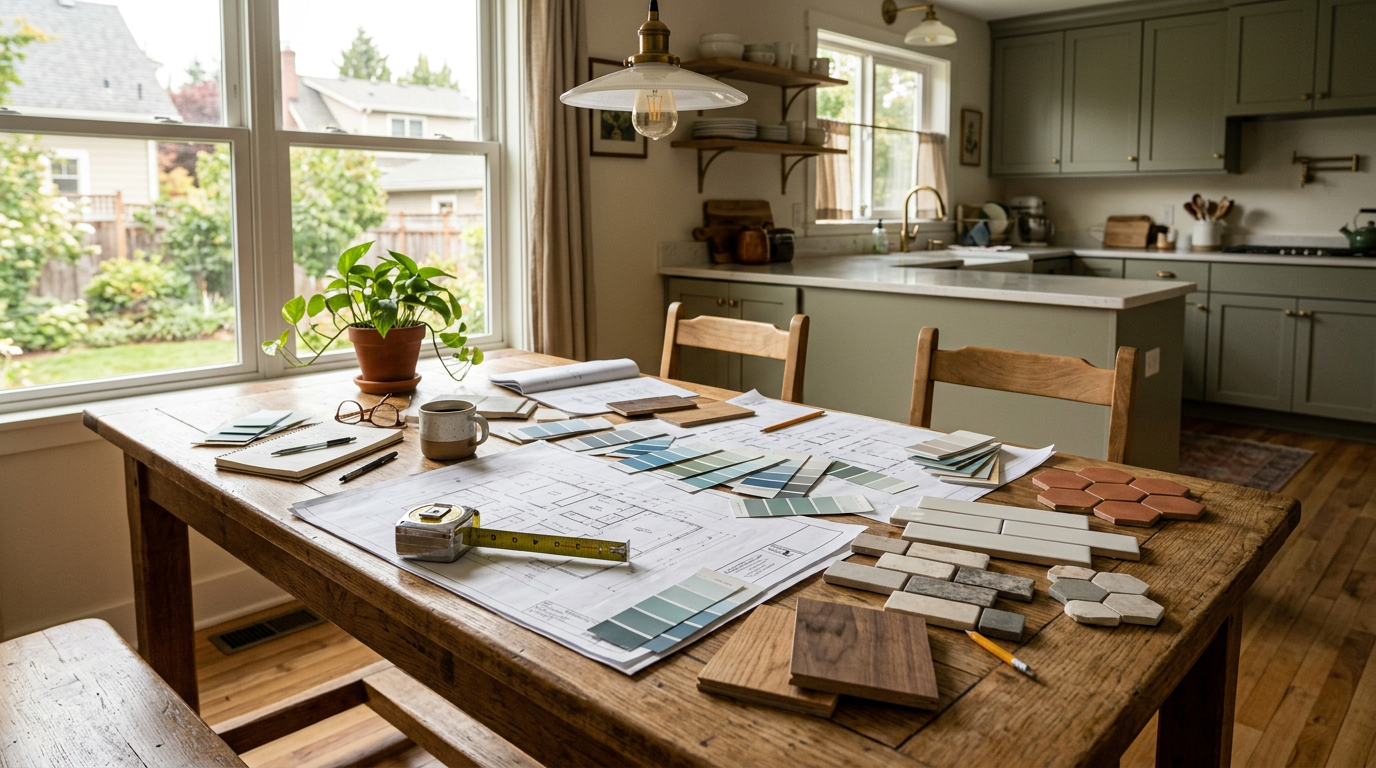
A color that looked perfect in the store can read completely different in your home. Northern-Illinois daylight shifts a lot between a bright July afternoon and a gray January morning, and open-concept rooms pick up color from adjacent spaces.
Buy sample pots of your top two or three choices and paint two-foot squares on different walls of the same room. Look at them in morning light, afternoon light and with your evening lamps on. It costs a few dollars and a day of waiting — far less than repainting a room you do not love.
Plan for Pets and Children
Wet walls, open paint cans, taped floors and ladders are irresistible to kids and pets — and all of them are hazards. Before day one, set up a closed-off room with food, water, litter boxes, toys and beds, and plan doors and gates so the work area stays off-limits.
If anyone in the home is sensitive to odor, ask about low-VOC and low-odor paint options during the estimate. They cost about the same and make occupied homes much more comfortable [VERIFY — confirm the low-VOC product lines you currently offer].
Ventilation
Modern interior paints have far less odor than they used to, but airflow still matters. Decide which windows in each work room can open, and make sure they are unlocked and accessible before the crew arrives. In winter — when most interior painting in the Plainfield area happens — even a cracked window and the furnace fan keep air moving without freezing the room.
Access, Parking and Daily Logistics
Crews work faster when logistics are settled up front. Clear a driveway or street parking spot, decide which door the crew will use, and agree on daily start and end times. If you work from home, pick a room that is not on the painting schedule for that day. None of this is difficult — it just needs to be decided once instead of every morning.
Scheduling and What to Expect
How long a project takes depends on room count, wall condition, repairs and coats — a single bedroom is not the same project as a whole main floor. Your written estimate should spell out the expected schedule for your specific home; if it does not, ask. We do not promise exact timelines before seeing the space, and you should be cautious of anyone who does.
Rooms are usually worked in sequence, so you keep livable space throughout the project. Furniture goes back once walls are dry to the touch — typically the same evening, though heavier pieces are best waited on until the next day.
The Final Walkthrough
Before the job is called done, walk every room with your contractor in good daylight. Look at walls from an angle — that is where misses, drips and thin spots show. Check cut lines at ceilings and trim, and confirm outlet covers, fixtures and furniture are back where they belong.
Our final payment is due only after this walkthrough, and every project is backed by our 2-year warranty. Keep a small amount of each leftover paint, labeled by room, for future touch-ups.
Printable Preparation Checklist
- Remove wall hangings, curtains, rods and outlet covers you plan to reuse
- Move small furniture, décor and electronics out of work rooms
- Group large furniture toward the room center, away from walls
- Clear closet contents if closets are being painted
- Take down or protect light fixtures and smoke detectors near work areas
- Point out wall damage — holes, cracks, stains — during the estimate
- Choose colors and sheens; test samples on each wall in day and evening light
- Set up a closed room for pets and children with food, water and toys
- Plan ventilation: which windows can open in each work room
- Clear a parking spot and an entry path for the crew
- Agree on daily start times and which bathrooms the crew may use
- Walk the finished rooms with your contractor before final payment
How General Pro Handles Preparation
Preparation is built into how we work, not an extra. During your free on-site estimate we walk each room with you, note wall repairs, and give you a written price before anything is scheduled. A 50% deposit locks in your materials and start date, and the balance is due only after your final walkthrough.
On the job, our crews mask and protect floors, fixtures and furniture before any paint is opened, and every project is backed by our 2-year warranty. We have served Plainfield and surrounding communities for 20 years — see real results in our project gallery. [VERIFY — confirm which preparation steps (moving heavy furniture, removing outlet covers, etc.) are included in your standard scope versus the homeowner's responsibility.]
We serve Plainfield, Naperville, Joliet, Bolingbrook, Aurora, Oswego, Romeoville, Shorewood and surrounding areas within about 50 miles of Plainfield, IL.
Interior Painting Prep FAQs
Do I need to move all my furniture before the painters arrive?
Not all of it. Small items, breakables, electronics and wall hangings should be moved out of the room. Large pieces like sofas and beds can usually be grouped in the center of the room and covered — tell your contractor what you can and cannot move during the estimate so the plan is clear before day one.
Should I repair drywall damage myself before the painting crew comes?
Small nail holes are easy to handle yourself, but larger holes, cracks and water damage are best left to the crew. A painting contractor that also does drywall repair can fold the repairs into the same visit, so the surface is patched, sanded and primed correctly before any finish coat goes on.
What paint sheen should I choose for each room?
As a general rule: flat or matte for ceilings and low-traffic walls, eggshell or satin for living rooms and bedrooms, and semi-gloss for trim, doors, kitchens and bathrooms where scrubbing matters. Higher sheen is more washable but shows wall imperfections more, so the condition of your walls matters as much as the room.
How do I keep pets and kids safe during an interior painting project?
Set up a closed-off room with their essentials before work starts, and keep doors to work areas shut. Wet paint, open cans, ladders and taped floors are all hazards. Ask your contractor about low-odor, low-VOC paint options if anyone in the home is sensitive to smells.
How long does interior painting take?
It depends on the number of rooms, wall condition, repair work and the number of coats. A single room in good shape is very different from a whole main floor with drywall repairs. Your written estimate should state the expected schedule for your specific project — ask for it before work begins.
Is there anything I should do the night before the crew arrives?
Yes: clear wall decorations, move small items and valuables, run a load of dishes, plan parking access, secure pets, and walk each room one more time with the checklist on this page. Ten minutes of prep the night before saves an hour on the first morning.