The short answer: if the drywall is still solid, flat and only the surface is damaged, it can probably be repaired. If the board is soft, sagging, crumbling, stained by water, or hiding an active leak, replacement is the safer choice. Knowing which path to take saves money, prevents callbacks, and keeps your Plainfield-area home looking its best.
After two decades of residential remodeling in Plainfield, Naperville, Joliet and surrounding communities, we see the same drywall problems on almost every job site. This guide walks through each one, explains when a patch is enough, and flags the situations that need a professional evaluation first.
Small Holes: Usually a Simple Repair
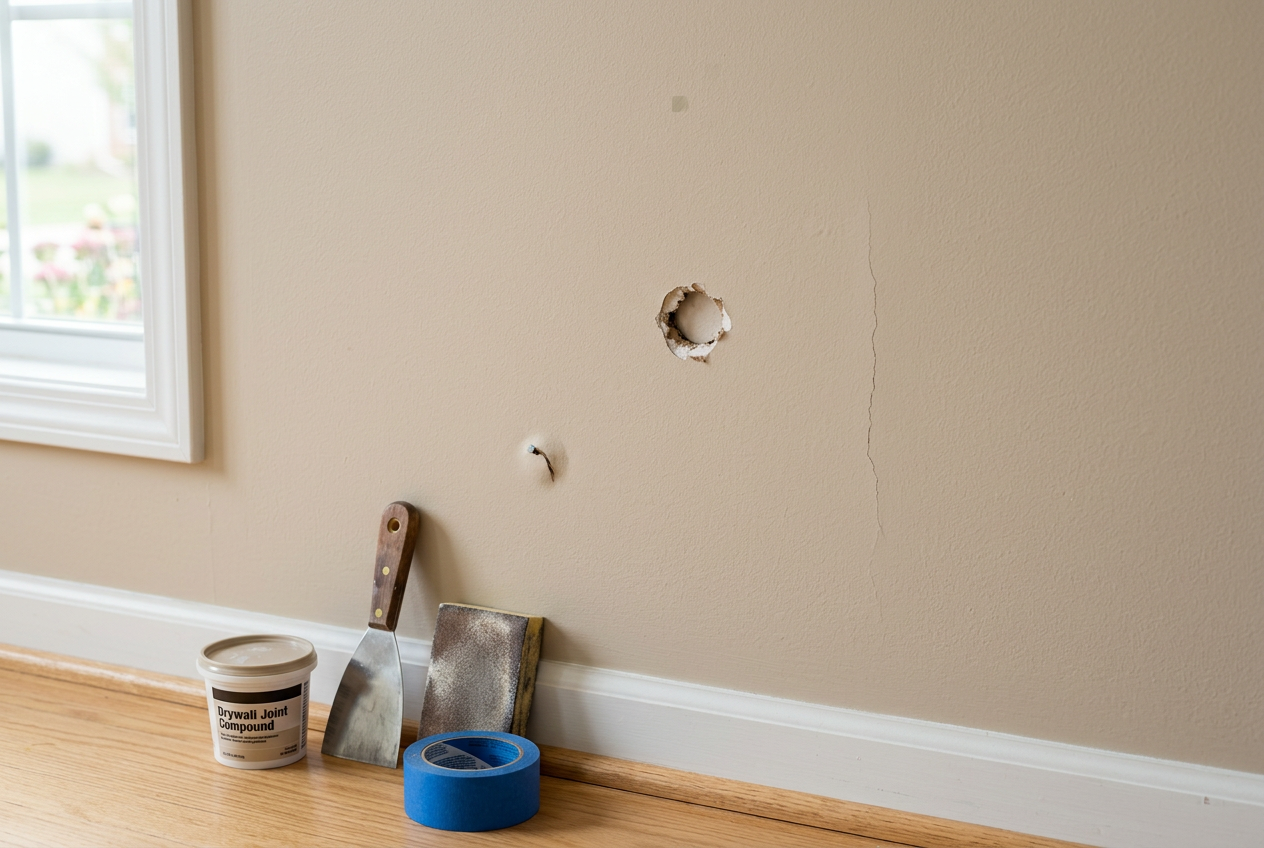
Doorknob dents, picture-hook holes and small impacts are the most common drywall issues. If the hole is smaller than about six inches across and the surrounding board is intact, a patch is almost always the right fix.
A proper repair covers the hole with a backer and patch, tapes the seams, applies thin coats of joint compound, sands the area smooth, and primes before painting. Done well, the repair is invisible after paint. The key is matching the texture so the wall does not look patched.
Nail Pops: Cosmetic, but Watch for Patterns
Nail pops look like small bumps or circles on the wall where a drywall fastener has pushed the finish outward. They are usually caused by normal framing movement, seasonal humidity swings, or the fastener working loose over time.
One or two nail pops are a quick repair: reset the fastener, add a screw nearby for holding power, cover with compound, sand, and retexture. If a wall has many nail pops, or they keep returning in the same area, the cause may be deeper — framing movement, moisture cycling, or a foundation issue. In that case, the underlying problem needs to be addressed before the surface is repaired.
Cracks: Location and Pattern Matter
Hairline cracks at drywall seams or corners are usually cosmetic. They can be retaped with fiberglass mesh tape, refinished and painted. This is one of the most common repairs in older Plainfield homes.
Not all cracks are cosmetic. Call a professional if you notice:
- Cracks that reopen within a year after being repaired
- Diagonal cracks running across the wall or ceiling
- Cracks paired with sticking doors or separated trim
- Cracks that follow the corner of a window or door frame
These patterns can indicate structural movement or settling. A drywall contractor can tell you whether the fix is cosmetic or whether a structural professional should take a look first.
Damaged Corners: Repair or Replace the Bead
Corner bead protects the outside edges of drywall walls. It dents easily from furniture bumps, vacuum hits and everyday traffic. If the bead is only dented, it can often be straightened, filled and sanded. If the metal or vinyl bead is kinked, twisted or pulling away from the wall, the damaged section should be cut out and a new bead installed.
Inside corners are different. Tears or cracks at inside corners are usually repaired by retaping the seam. The repair is only as good as the tape and mud work, so this is a spot where experience shows.
Sagging Drywall: Almost Always Replacement
Sagging ceilings or bowed walls mean the drywall has lost support or has been stressed by weight, moisture or improper fastening. Sagging is not a surface problem — it is a structural attachment problem. Patching over it will not stop the sag and may make the ceiling unsafe.
Replacement usually involves removing the affected sheets, inspecting the framing, adding or replacing fasteners, and installing new drywall. In bathrooms, kitchens and basements, sagging can also point to humidity issues that need ventilation improvements before new board goes up.
Water Damage: Fix the Leak First
Water stains, swelling, soft spots and discoloration are signs that drywall has absorbed moisture. Wet drywall loses its strength, and the paper facing can separate from the gypsum core. Even if the surface looks dry, the board behind it may still be damp.
The correct order is: stop the leak, dry the cavity, then replace the damaged drywall. Painting over a water stain without fixing the source traps moisture and can lead to mold, mildew and recurring damage. If you are not sure where the water is coming from, a plumber or roofing contractor should find it before the drywall work begins.
Mold and Moisture Warning Signs
Safety note
Active leaks and suspected mold require appropriate professional evaluation. If you see visible mold, smell mustiness, or have had a leak that was not fully dried, stop and have the area assessed by a qualified remediation or plumbing professional before drywall repairs begin. Do not disturb visible mold without proper containment.
Mold on drywall is not always visible from the finished side. It can grow on the back of the board, inside the cavity, or behind baseboards. If anyone in the home has allergies, asthma or respiratory sensitivity, treat suspected mold seriously and bring in the right specialist.
Texture Matching: The Detail That Hides the Repair
The hardest part of drywall repair is not the patch — it is making the patch disappear. Texture matching requires identifying the existing pattern, choosing the right compound consistency, and applying it with the same technique that created the original wall.
Common textures in local homes include:
- Orange peel: light, bumpy spray texture
- Knockdown: flattened, splotchy pattern
- Popcorn: common on ceilings, harder to match
- Skip trowel: hand-troweled, Mediterranean look
- Smooth / level 5: no texture, requires the most skill to blend
A professional drywall crew primes the repair before painting, because unpainted compound absorbs paint differently than the surrounding wall. Skipping primer is the most common reason a repair becomes visible six months later.
Painting After Repairs: Prime, Then Finish
Fresh joint compound is porous. If you paint directly over it, the new paint will flash — it will look shinier or flatter than the surrounding wall. The fix is simple: one coat of quality primer over the repaired area, then two coats of finish paint.
This is why homeowners in Plainfield often hire a contractor that does both drywall repair and painting. One crew handles the patch, texture, primer and paint, so there is no blame-shifting if the finish does not match.
When to Call a Drywall Professional
You can handle tiny nail holes and minor touch-ups yourself. Call a pro when the damage is beyond cosmetic, when texture matching is involved, or when the repair needs to look perfect after paint.
Call a drywall contractor if you have:
- Holes larger than six inches or multiple holes in one area
- Sagging ceilings or bowed walls
- Water damage, stains or soft spots
- Cracks that keep coming back
- Damaged or rusted corner bead
- Texture that needs to be matched
- A repair that will be painted afterward
A good contractor will tell you honestly whether the damage is a repair or a replacement, explain why, and give you a written estimate before work starts.
Repair vs. Replacement at a Glance
| Problem | Usually Repair | Usually Replace |
|---|---|---|
| Small holes | Under 6 inches, solid surrounding board | Large hole, weakened edges, near a corner |
| Cracks | Hairline seam or corner cracks | Diagonal, recurring, or structural cracks |
| Nail pops | One or two isolated pops | Many pops in one area or repeated returns |
| Water damage | Minor surface stain after leak is fixed | Soft, swollen, crumbling or moldy board |
| Ceiling sag | None | Sagging, loose or bowed drywall |
| Corners | Minor dent in corner bead | Twisted, pulling or rusted bead |
Our Drywall Repair Service
General Pro Painting & Drywall handles drywall repair as part of residential remodeling projects across Plainfield and nearby communities. [VERIFY BEFORE PUBLISHING] We patch holes, retape seams, match texture, and replace damaged sections before primer and paint go on.
Because we do both drywall and painting, repairs are finished in one workflow — no waiting between trades, no mismatched texture, and one warranty covering the work. Free estimates are available by phone or through our contact form.
Where We Repair Drywall
We serve homeowners in Plainfield, Naperville, Joliet, Bolingbrook, Aurora, Oswego, Romeoville, Shorewood and throughout the surrounding counties. If you are within about 50 miles of Plainfield, IL, we can come out, assess the damage, and give you a clear recommendation on repair versus replacement.
Frequently Asked Questions
Can small holes in drywall be patched without replacing the whole sheet?
Yes. Holes smaller than about six inches across are usually repaired with a patch, joint compound and tape, then sanded and textured to match the surrounding wall. Larger holes, multiple holes close together, or damage near a corner may need a new piece of drywall cut in.
Why do nail pops keep coming back in the same spot?
Nail pops happen when the fastener loosens from normal framing movement, temperature swings or humidity changes. Setting the old nail, adding a screw nearby and covering the area usually fixes it. If the same wall has many nail pops, it can point to framing movement or moisture cycling that should be checked before repairs are made.
Is a hairline crack in drywall serious?
A single hairline crack at a seam or corner is usually cosmetic and can be retaped and refinished. Cracks that keep reopening, run diagonally across the wall, or appear with door-frame separation may signal movement or settling and should be evaluated before cosmetic repairs.
Can water-damaged drywall be dried and painted over?
Painting over water damage does not fix it. Wet drywall loses strength and can grow mold or mildew behind the surface. The source of the water must be found and fixed first, then the damaged section is cut out, the cavity is dried, and new drywall is hung, taped and finished.
How do contractors match texture after a drywall repair?
Texture matching takes practice. A good drywall crew will identify the existing pattern — orange peel, knockdown, popcorn, skip trowel or smooth — and replicate it using the right tools, compound consistency and spray technique. The repaired area is then primed and painted so it blends with the rest of the wall.
When should I call a professional instead of doing drywall repair myself?
Call a pro for sagging ceilings, large or multiple holes, water or mold damage, cracks that keep returning, damaged corners, or any repair that needs texture matching and painting afterward. A contractor that handles both drywall and painting can finish the wall in one workflow instead of hiring two separate trades.